
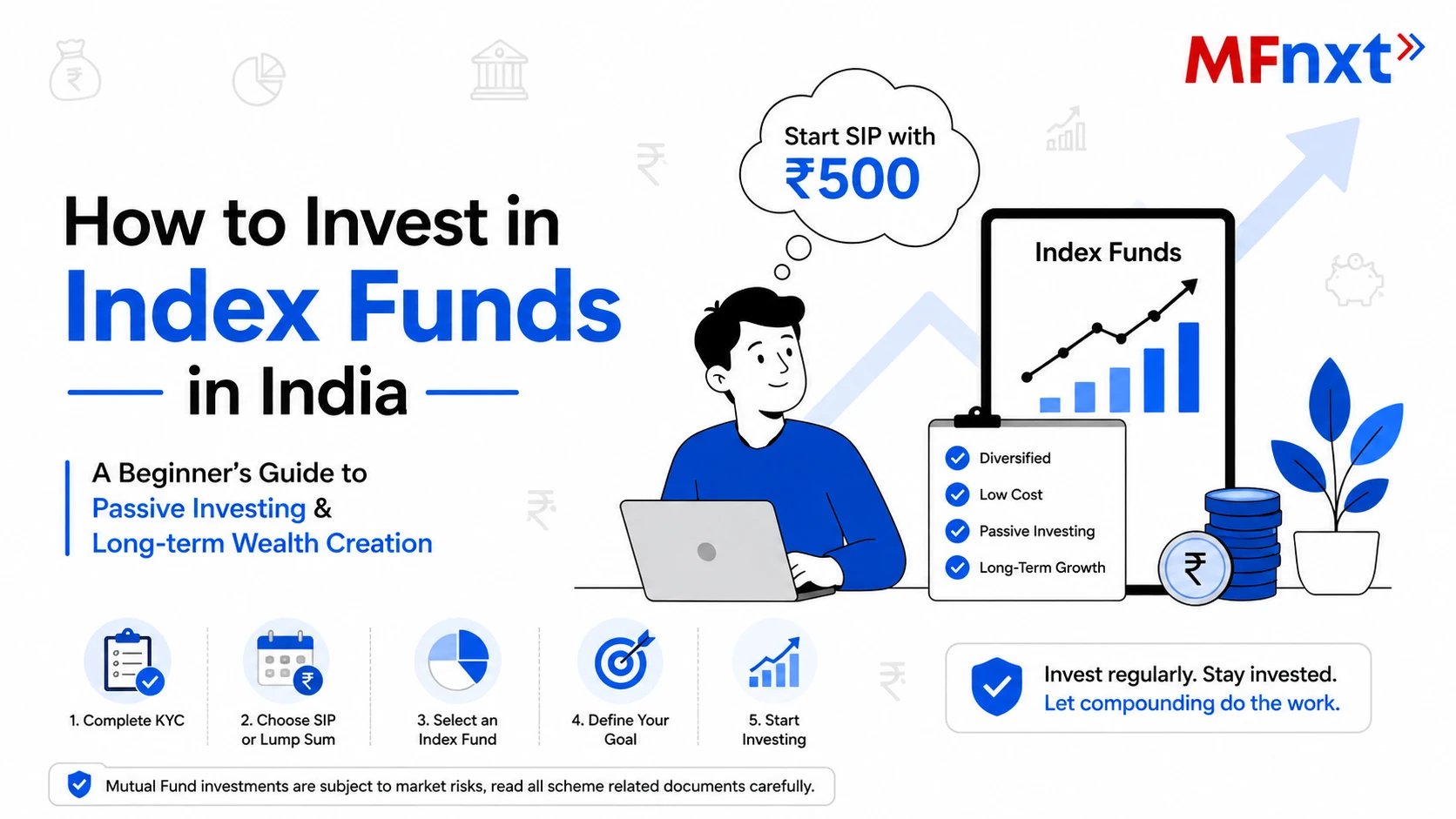
Whether you're a beginner or exploring passive investing, understanding how to invest in Index Funds can help you make informed financial decisions.
In this guide, we'll explain how to invest in Index Funds in India, understand SIP investing, complete KYC requirements, and explore the steps involved before making an investment.
Quick Summary
- 1. Index Funds track market indices such as Nifty 50 and Sensex.
- 2. Investors can start through SIP or lump sum investing.
- 3. KYC verification is generally required before investing.
- 4. Index Funds provide diversified market exposure.
- 5. Goal-based investing can help investors stay focused on long-term objectives.
What Are Index Funds?
An Index Fund is a type of mutual fund that aims to replicate the performance of a market index such as the Nifty 50 or Sensex.
Instead of actively selecting stocks, Index Funds generally invest in the same companies that form part of the underlying index. This approach is commonly referred to as passive investing.
Many investors explore Index Funds because they offer broad market exposure through a single investment vehicle.
Why Do Investors Choose Index Funds?
Index Funds have become increasingly popular among investors seeking a simple and diversified investing approach.
- 1. Diversification: Exposure to multiple companies within an index.
- 2. Simplicity: No need to select individual stocks.
- 3. Passive Investing: Funds aim to track a benchmark index.
- 4. Lower Costs: Generally lower expense ratios compared to many actively managed funds.
Looking for Index Funds?
You are in the right place. We have created investment baskets for you to choose from, based on your financial goals.
Explore BasketsStep 1: Complete Your KYC
Before investing in mutual funds, investors generally need to complete Know Your Customer (KYC) verification.
New investors can also review our complete mutual fund onboarding guide before beginning their investment journey.
Commonly required documents may include:
- 1. PAN Card
- 2. Aadhaar Card
- 3. Mobile Number
- 4. Email Address
- 5. Bank Account Details
- 6. DigiLocker Access (where applicable)
If you have not completed KYC, you can review our guide for new investors completing KYC onboarding.
Step 2: Choose Between SIP and Lump Sum Investing
Once onboarding is completed, investors can generally choose between SIP and lump sum investing.
SIP (Systematic Investment Plan)
A SIP allows investors to invest a fixed amount at regular intervals, helping build investing discipline over time.
- ₹500 per month
- ₹1,000 per month
- ₹5,000 per month
Lump Sum Investing
Lump sum investing involves investing a larger amount at one time rather than through periodic installments.
The choice between SIP and lump sum investing depends on individual financial goals and circumstances.
Step 3: Select an Index Fund
Investors can choose from various Index Funds tracking different market indices.
- 1. Nifty 50 Index Funds
- 2. Nifty Next 50 Index Funds
- 3. Sensex Index Funds
- 4. Broad Market Index Funds
Before investing, investors may review factors such as:
- 1. Investment Objective
- 2. Benchmark Index
- 3. Expense Ratio
- 4. Tracking Error
- 5. Scheme Documents
Step 4: Define Your Investment Goal
Having a clear investment objective can help investors stay focused during market fluctuations.
Emergency Planning
Some investors allocate investments towards emergency preparedness and short-term financial needs.
Medium-Term Goals
Investors may plan for education, travel, home purchases, or other personal goals.
Long-Term Investing
Long-term investing goals may include retirement planning or future financial objectives.
Step 5: Review and Start Investing
Before completing an investment transaction, investors may review:
- 1. Investment Amount
- 2. SIP or Lump Sum Selection
- 3. Bank Details
- 4. Nominee Details
- 5. Fund Information
Once verification and confirmation are completed, investments can generally be initiated through the selected platform.
Common Mistakes Beginners Should Avoid
Investing Without a Goal
Having a clearly defined financial objective can help investors maintain discipline during market movements.
Expecting Immediate Results
Financial markets may experience short-term volatility. Many investors explore Index Funds as part of a longer-term investing approach.
Ignoring Diversification
Diversification remains an important consideration when building an investment portfolio.
Not Reviewing Scheme Information
Investors should review relevant scheme documents and understand investment objectives before investing.
Can Beginners Invest in Index Funds?
Many beginners explore Index Funds because they offer:
- 1. Diversification
- 2. Simplicity
- 3. Passive Investing Approach
- 4. Broad Market Exposure
- 5. Lower Costs Compared to Many Actively Managed Alternatives
Conclusion
Index Funds have become a popular option for investors seeking diversified market exposure through a passive investing approach.
Understanding KYC requirements, selecting an investment method, and defining investment goals can help investors make informed financial decisions.
If you're new to Index Fund investing, you may also find these guides useful:
At MFnxt, investors can explore digital onboarding and Index Fund investment options through a simplified investing experience.
Frequently Asked Questions
1. How much money is required to invest in Index Funds?
Minimum investment amounts vary by fund and platform.
2. Can I invest in Index Funds through SIP?
Yes, many Index Funds offer SIP investment options.
3. Can beginners invest in Index Funds?
Many investors explore Index Funds because of their diversified and passive investing approach.
4. What documents are required before investing?
PAN, Aadhaar, bank account details, mobile number and email are commonly required.
5. Why is KYC required before investing?
KYC verification helps verify investor identity before investing in mutual funds.
6. Are Index Funds suitable for long-term investing?
Many investors explore Index Funds as part of a long-term investing approach because they aim to track market indices and provide diversified exposure.
This article is intended for educational and informational purposes only. It should not be considered investment advice or a recommendation to buy, sell or hold any particular mutual fund or security.
Mutual fund investments are subject to market risks. Please read all scheme-related documents carefully before investing.