INDEX INVESTING ACADEMY

Index Fund Basics

Build a strong foundation in index investing. Learn what index funds are, how they work, their benefits, risks and how they can help create long-term wealth.

5+ Learning Topics
9+ Educational Articles
2 Investment Calculators
Index Fund Basics
What is an Index Fund
BEGINNER GUIDE

What is an Index Fund?

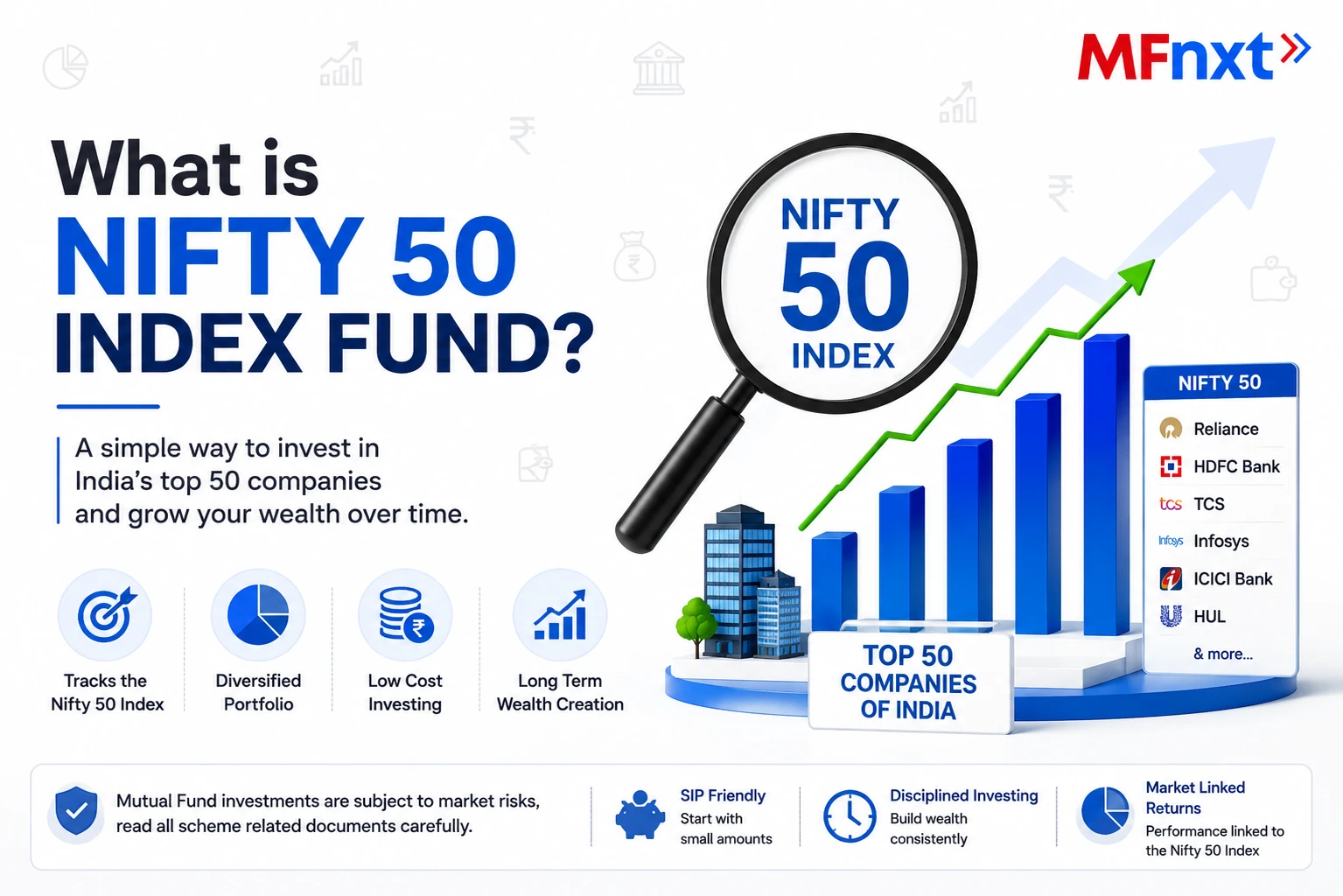
An index fund is a type of mutual fund that aims to replicate the performance of a market index such as the Nifty 50, Nifty Next 50 or Sensex.

Instead of selecting individual stocks, index funds invest in all the companies that make up the index in the same proportion.

This passive investment approach helps keep costs low, improves transparency and allows investors to participate in the long-term growth of the overall market.

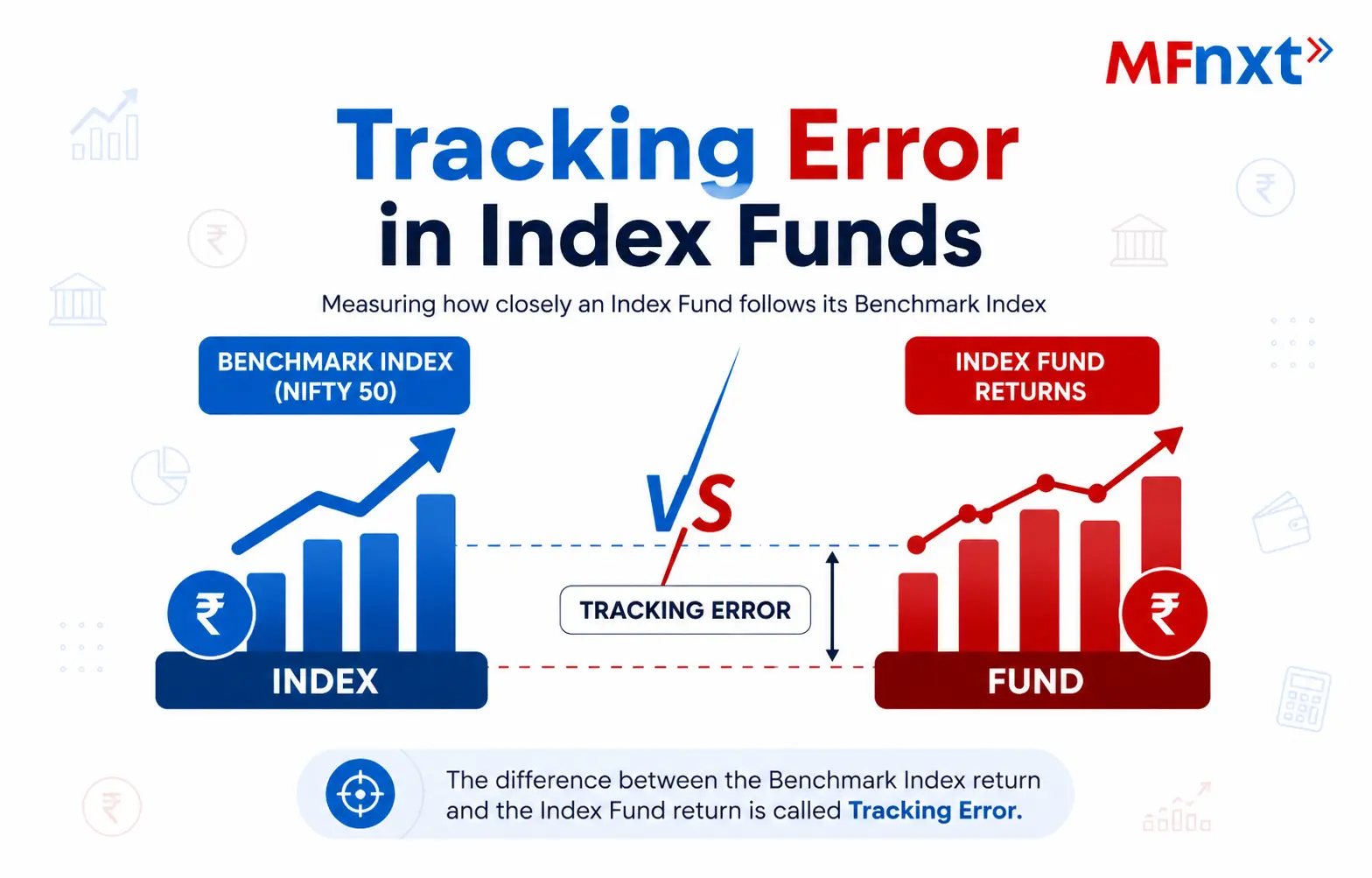
Index funds do not try to beat the market. Their goal is to match the performance of the underlying index.
BENEFITS

Why Investors Choose Index Funds

Many investors use index funds as a low-cost and diversified investment approach for long-term financial goals.

Low Cost

Index funds typically have lower expense ratios because they do not require active stock selection.

Diversification

Gain exposure to multiple companies and sectors through a single investment.

Transparency

Investors can easily understand what they own because the portfolio mirrors a public index.

Simplicity

A straightforward investment approach without relying heavily on fund manager decisions.

COMPARISON

Index Fund vs Active Fund

One of the most common questions investors ask is whether they should choose an actively managed fund or an index fund. Understanding the differences can help you make better investment decisions.

Feature Index Fund Active Fund
Objective Track Index Beat Index
Expense Ratio Lower Higher
Stock Selection Automatic Fund Manager
Transparency High Moderate
Portfolio Turnover Low Higher
Goal Match Market Outperform Market

Which One Should You Choose?

Index funds are designed for investors who prefer a low-cost, diversified and long-term investing approach.

Active funds may offer opportunities to outperform the market, but they often come with higher costs and depend heavily on fund manager decisions.

Many investors consider index funds for their simplicity, transparency and diversification benefits. Investment outcomes depend on market conditions and individual financial circumstances.

Many beginners consider index funds a simple and disciplined way to begin their investment journey, depending on their financial goals and risk tolerance.
INVESTMENT TOOLS

Plan Your Investments

Explore calculators designed to help you estimate returns and achieve financial goals.

BEGINNER ROADMAP

Your Journey to Index Investing

Follow these simple steps to start investing confidently.

1

Understand What an Index Is

2

Understand What an Index Fund Is

3

Learn How Index Funds Work

4

Compare Index Funds & ETFs

5

Start Investing for the Long Term

FAQ

Frequently Asked Questions

Answers to the most common questions about Index Funds and Index Investing.

Index Funds are subject to market risk, but they provide diversification across multiple companies, making them a popular long-term investment option.

Yes. Index Funds are often considered relatively simple investment products for beginners due to their passive investment approach.

Minimum SIP amounts vary across fund houses and investment platforms.

No. Index Funds aim to match the performance of the benchmark index rather than outperform it.

ETFs trade on stock exchanges while Index Funds are purchased directly through mutual fund platforms.

Many investors choose index funds because of their relatively low costs, broad diversification and transparent investment approach. Suitability depends on an individual's financial objectives and risk profile.
Important Information

This content is intended solely for educational and informational purposes and should not be construed as investment advice, a recommendation, solicitation or an offer to buy or sell any securities or mutual fund products. Investments in securities markets are subject to market risks. Read all scheme related documents carefully before investing. Past performance of any index or investment does not guarantee future results.

Open help chat
MFnxt Help
👋 Hi! I’m MFnxt assistant. Ask me about investing, SIPs, or baskets.
Tip: Try “Emergency basket” or “Start investing”.